Key Takeaways
- Scale Challenges: Manual inspection of large injection-molded bumpers is time-consuming and prone to human error.
- AI Efficiency: Automated systems can scan entire bumpers in seconds, helping match production cycle times.
- Defect Detection: Advanced vision systems can specifically target short shots, flash, and sink marks.
- Data-Driven: AI-powered systems provide real-time feedback to help optimize injection molding parameters.
Producing automotive bumpers through injection molding is a feat of engineering, but ensuring defect-free quality across such large surface areas presents a significant challenge. As manufacturers face increasing pressure to reduce cycle times, relying on human operators to visually inspect large, complex geometries is becoming increasingly difficult. Implementing an automated bumper inspection system can help ensure consistent quality without creating a bottleneck in production.
What Is a Bumper Inspection System?
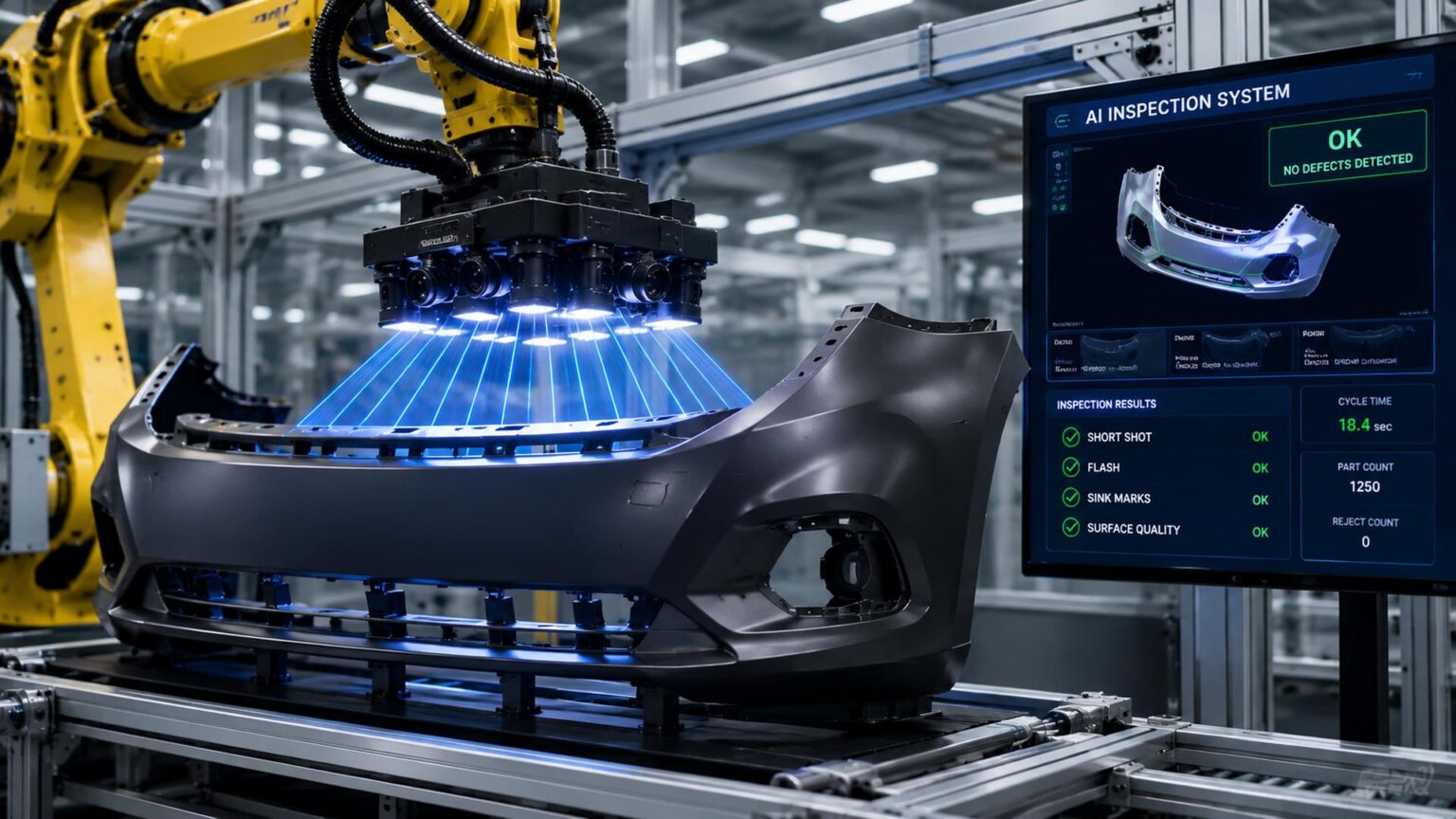
A bumper inspection system is an automated quality control solution designed specifically for the automotive injection molding industry. It utilizes high-resolution cameras, structured lighting, and artificial intelligence algorithms to scan large plastic bumpers for surface and dimensional defects.
Unlike manual inspection, this system can analyze the entire part geometry in real time, identifying defects such as short shots and flash immediately after the part exits the mold. This helps ensure that only components meeting quality standards move to painting or assembly.
The Challenge: Inspecting Large-Format Injection-Molded Parts
Bumpers are among the largest single components produced through automotive injection molding. Their sheer size creates unique quality control challenges:
- Surface Area: A human inspector may require several minutes to thoroughly check a wrap-around bumper for minute imperfections.
- Ergonomics: Manipulating large parts to inspect undercuts and edges can cause operator fatigue, potentially leading to missed defects.
- Cycle Time: Injection molding cycles are fast. If inspection takes longer than the cooling cycle, the inspection station can become a bottleneck.
An AI-driven bumper inspection system addresses these challenges by utilizing multi-camera arrays to view the part from multiple angles simultaneously, completing a full scan in seconds.
Targeting Critical Defects: Short Shots, Flash, and Sink Marks
In bumper manufacturing, three common defects can lead to part rejection: short shots, flash, and sink marks. An effective inspection system can be configured to detect these defects with high precision.
1. Short Shots
Short shots occur when molten plastic fails to completely fill the mold cavity. On a large bumper, this can occur at the extremities—the points furthest from the injection gate. This can result in missing tabs, clips, or incomplete edges, rendering the part unusable.
2. Flash
Conversely, flash occurs when excess plastic escapes from the mold cavity, usually along the parting line. This leaves a thin, unwanted layer of material protruding from the bumper’s edge. Flash can interfere with assembly fit and may require manual trimming if it is not detected early.
3. Sink Marks
Sink marks are depressions on the surface caused by uneven cooling or insufficient packing pressure. On Class-A surfaces such as bumpers, even a small sink mark can become highly visible once the part is painted and clear-coated.
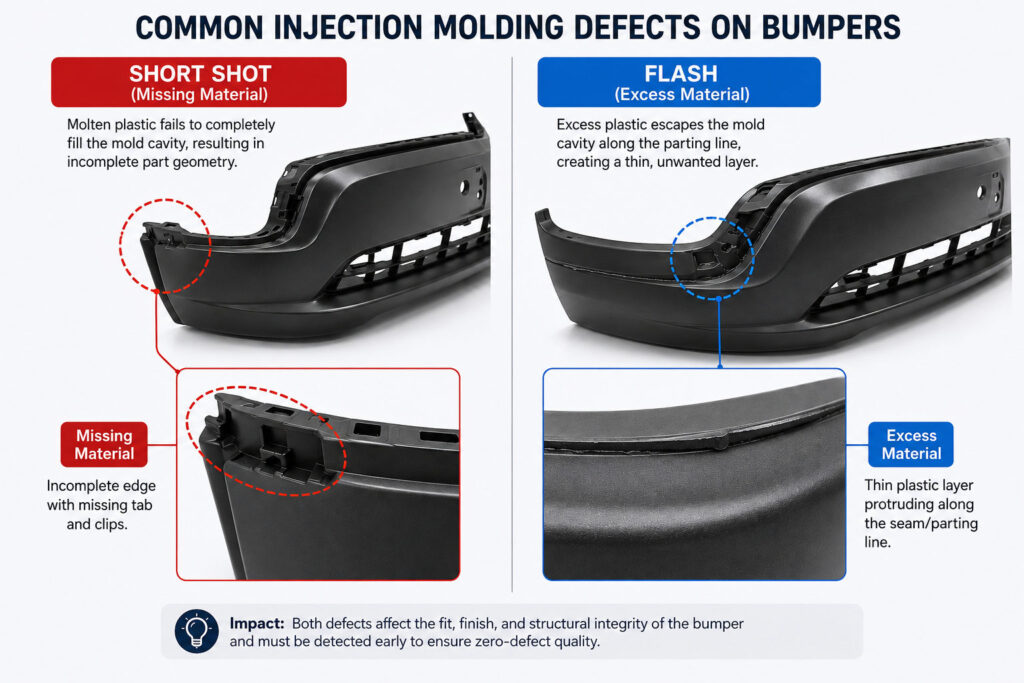
Figure 1: Common injection molding defects detected by AI vision systems.
Comparative Analysis: Manual vs. Automated Inspection
The transition from manual inspection to an automated bumper inspection system can offer measurable operational benefits. The table below outlines the key differences.
| Feature | Manual Inspection | AI Bumper Inspection System |
|---|---|---|
| Inspection Speed | 2–5 minutes per part | 10–30 seconds per part |
| Defect Detection Rate | 70–85% (may decrease with fatigue) | 99.9% (consistent) |
| Data Logging | Manual checklists (prone to error) | Automated digital records and images |
| Defect Types | Obvious surface flaws | Micro-cracks, sink marks, short shots, and flash |
| Cost Implications | High recurring labor costs | Higher upfront capital investment with lower recurring costs |
Optimizing the Production Line
Integrating a bumper inspection system does more than catch defective parts; it can also help improve the molding process. By detecting a sink mark or short shot immediately, the system can provide feedback to the injection molding machine, enabling adjustments to parameters such as pressure, temperature, or holding time.
This closed-loop feedback can help prevent the continued production of defective parts, reducing scrap and saving raw materials and energy.
Ready to eliminate defects and improve your cycle times? Automate your injection molding line today. Book a demo.
Frequently Asked Questions
Yes. Advanced systems can use specialized lighting techniques to detect surface imperfections on both raw molded plastic and painted surfaces, helping ensure final finish quality.
Modern AI-powered systems can be software-defined, allowing operators to switch between different bumper models (SKUs) by loading the corresponding inspection profile. This makes them suitable for mixed-model production lines.
Many systems are designed for retrofitting and can be installed over existing conveyors or configured as standalone inspection stations immediately following the robotic demolding process.
The minimum detectable defect size depends on factors such as camera resolution, optics, lighting, and field of view. Under suitable conditions, high-resolution vision systems can detect very small defects, potentially down to 0.1 mm.