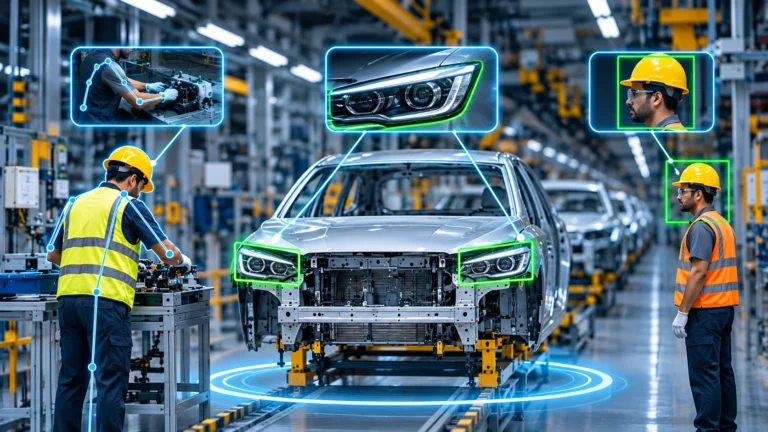
Supply chains and manufacturing operations are becoming increasingly complex. Manufacturers and logistics operators must manage material movement, production schedules, warehouse activities, workforce efficiency, and workplace safety while maintaining consistent operational performance.
Traditional approaches to managing these activities often depend on manual supervision, periodic audits, and information collected from multiple systems. Although automation has improved several aspects of industrial operations, visibility into what actually happens across factory floors and warehouses remains a challenge.
Artificial Intelligence (AI) and computer vision are creating new opportunities to address this gap.
By analyzing images and video streams from existing camera infrastructure, AI-powered vision systems can identify operational patterns, monitor activities, detect deviations, and provide actionable insights. This enables organizations to better understand material movement, workforce activities, equipment utilization, and safety compliance.
For manufacturers, this means an opportunity to connect lean manufacturing principles with real-time visual intelligence. Instead of relying only on periodic observations, organizations can use continuous operational data to identify inefficiencies and improve processes.
Understanding Lean Operations in Modern Manufacturing
Lean manufacturing is an operational approach focused on maximizing customer value while minimizing activities that do not contribute to that value.
The objective is not simply to reduce costs or increase production speed. It is to establish efficient workflows, eliminate unnecessary activities, improve resource utilization, and continuously enhance operational performance.
Some common areas of focus include:
- Reducing unnecessary material movement.
- Minimizing waiting time between production stages.
- Preventing defects and rework.
- Improving workforce and equipment utilization.
- Standardizing operational procedures.
- Maintaining safe and organized work environments.
- Identifying bottlenecks in production and material handling.
These principles also apply to warehouse and supply chain operations, where efficient inventory movement, loading, unloading, storage, and dispatch are essential.
However, identifying inefficiencies consistently requires visibility into daily operations. This is where computer vision can contribute.
From Periodic Observation to Continuous Operational Visibility
Most manufacturing facilities and warehouses already have cameras installed for security and operational monitoring. However, conventional camera systems primarily record events rather than actively interpreting them.
AI-powered video analytics changes how this infrastructure can be used.
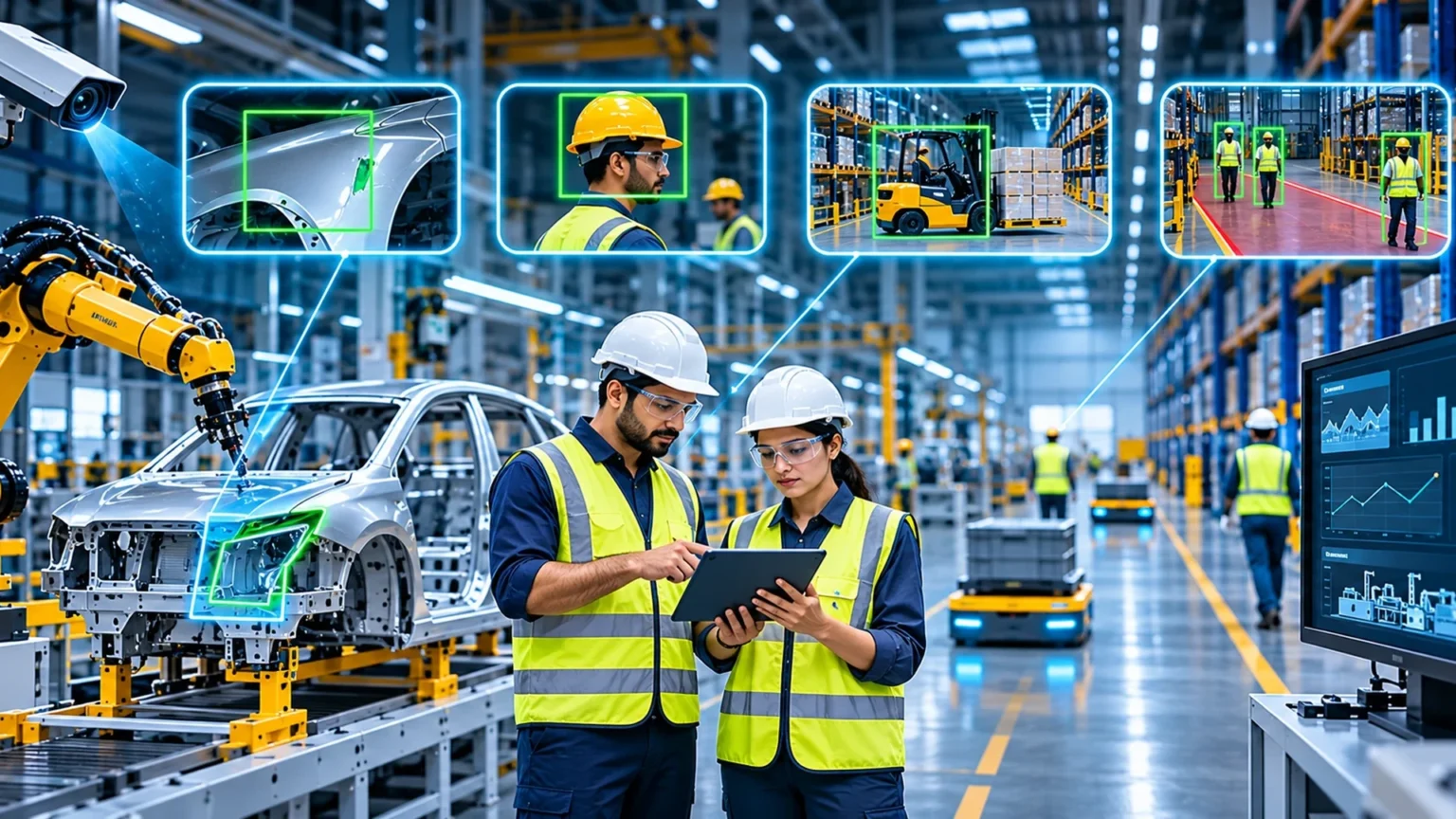
Computer vision models can analyze camera feeds to identify people, vehicles, objects, movements, and specific activities. Based on predefined requirements, the system can recognize patterns and flag situations that require attention.
For example, visual analytics can help identify:
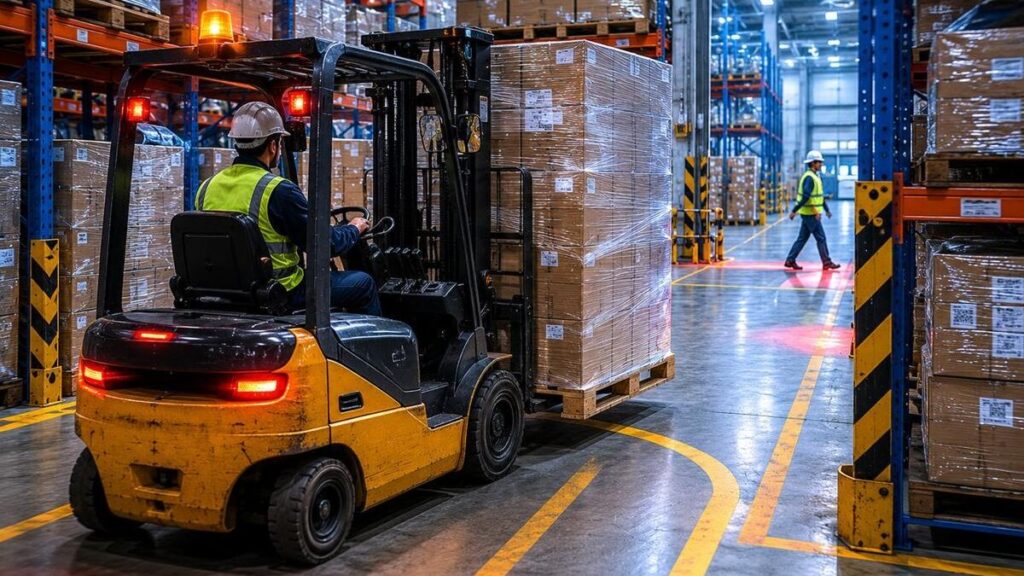
- Forklift movement and pedestrian interactions.
- Congestion at warehouse intersections.
- Unauthorized access to restricted areas.
- Delays in material handling activities.
- Deviations from standard operating procedures.
- PPE compliance issues.
- Repetitive operational inefficiencies.
Instead of depending entirely on supervisors to observe these activities manually, organizations can use AI-generated alerts and dashboards to improve operational visibility.
How AI Vision Supports Lean Manufacturing and Supply Chain Operations
Computer vision can support several lean manufacturing principles by making operational activities measurable and easier to monitor.
1. Identifying Unnecessary Movement and Material Handling Inefficiencies
Unnecessary movement of materials, equipment, and people can increase operational time without adding value to the production process.
In warehouses and manufacturing facilities, inefficient movement can occur because of poorly organized routes, repeated material handling, congestion, or improper workstation layouts.
AI-powered video analytics can help monitor movement patterns and identify areas where operational flow may be improved.
Potential applications include:
- Monitoring forklift movement within designated areas.
- Identifying recurring congestion at intersections.
- Observing material movement between workstations.
- Monitoring loading and unloading activities.
- Identifying repeated movement patterns that may indicate inefficient workflows.
These insights can help operations teams review material flow, improve route planning, and evaluate workstation arrangements.
2. Reducing Waiting Time and Identifying Bottlenecks
Waiting time is a common source of inefficiency in manufacturing and logistics operations.
Production activities may be delayed because materials are unavailable, workstations are occupied, loading bays are congested, or operators are waiting for the next task.
Computer vision can help monitor activities across different operational areas and identify recurring patterns of inactivity or congestion.
For example, video analytics can be used to observe:
- Queue formation near loading and unloading zones.
- Material accumulation around production stations.
- Delays between consecutive assembly activities.
- Workstation utilization patterns.
- Movement interruptions along production routes.
When combined with production schedules and operational data, these observations can help managers investigate bottlenecks and improve workflow coordination.
3. Improving Workforce Productivity Through Action Recognition
Workforce productivity is influenced by how efficiently tasks are performed, how consistently procedures are followed, and how effectively workstations are organized.
Traditional productivity measurement often relies on manual observations, production reports, and periodic time studies. These methods may not capture every operational variation.
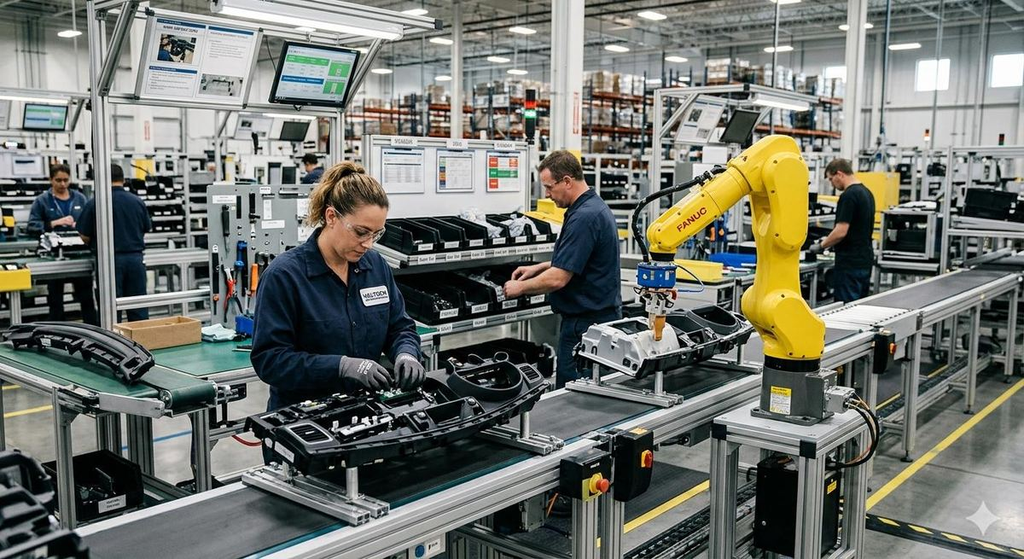
AI-based action recognition can analyze video streams to understand activities performed by workers and identify deviations from predefined workflows.
Applications include:
- Time and motion analysis.
- Pick-and-place activity monitoring.
- Assembly sequence verification.
- SOP adherence monitoring.
- Postural and ergonomic analysis.
- Identification of repetitive process deviations.
For instance, in an assembly operation, an AI model can be configured to recognize a sequence of activities and identify whether the prescribed steps are being followed.
This gives supervisors additional information to evaluate workflow efficiency, identify training requirements, and improve process consistency.
4. Strengthening Workplace Safety Across Factories and Warehouses
Safety is an important part of lean operations. Workplace incidents can interrupt production, affect workforce availability, and create additional operational costs.
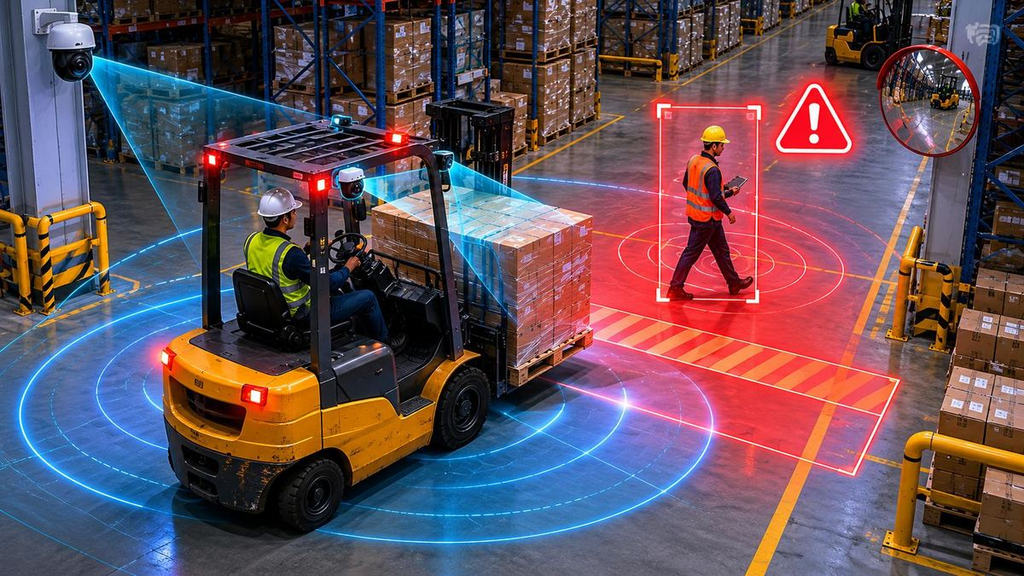
Warehouses and manufacturing facilities frequently involve interactions between people, forklifts, vehicles, and industrial machinery.
AI-powered surveillance can provide continuous monitoring of designated areas and identify potential safety violations.
Common applications include:
- PPE and uniform compliance detection.
- Forklift and pedestrian movement monitoring.
- Restricted-area intrusion detection.
- Virtual geofencing.
- Crowd gathering and people monitoring.
- Fall detection and unsafe activity identification.
For example, computer vision can identify when a person enters a designated restricted zone or when a worker is not wearing the required protective equipment.
Alerts can be generated to help supervisors investigate and respond to potential violations.
Such systems complement existing safety procedures and enable more consistent monitoring across large facilities.
5. Preventing Quality Issues Before They Move Downstream
In lean manufacturing, defects and rework are significant sources of operational waste.
A defective component identified late in production may require additional inspection, material handling, rework, or replacement.
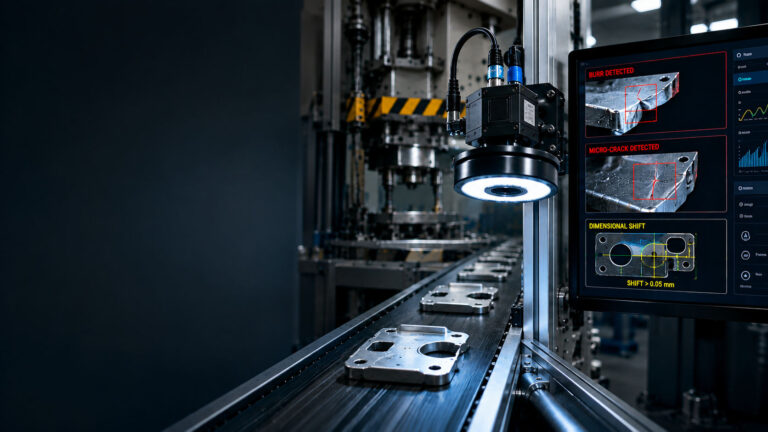
AI-powered visual inspection can help identify defects closer to the point where they occur.
Depending on the manufacturing application, computer vision can identify:
- Surface scratches and cracks.
- Missing or incorrectly installed components.
- Dimensional variations.
- Colour and coating inconsistencies.
- Sealant application deviations.
- Incorrect assembly conditions.
Integrating inspection into production workflows helps manufacturers identify non-conforming components before they move to subsequent stages.
This can reduce unnecessary rework and support more consistent production quality.
6. Monitoring Standard Operating Procedures
Lean operations depend on standardized processes. When different operators perform the same task in different ways, variations can affect quality, productivity, and safety.
AI-based action recognition can help monitor whether predefined operational sequences are followed.
For example, in a manufacturing workstation, a vision system can recognize the expected sequence of component handling and assembly activities.
If a particular step is skipped or an activity deviates from the defined procedure, the system can flag it for review.
This provides an additional layer of process monitoring and helps organizations identify where operational improvements or employee training may be required.
Applying Computer Vision Across Manufacturing and Supply Chain Environments
The applications of visual intelligence extend beyond individual production lines.
| Operational environment | Potential computer vision applications |
|---|---|
| Manufacturing shop floors | Assembly monitoring, SOP adherence, defect detection and workstation analysis |
| Warehouses | Forklift monitoring, people counting, material movement and restricted-area monitoring |
| Loading and unloading zones | Activity monitoring, congestion identification and safety compliance |
| Production lines | Component inspection, object counting and process verification |
| Storage facilities | People monitoring, intrusion detection and movement analysis |
| Industrial workstations | Time and motion analysis, ergonomic monitoring and action recognition |
The value comes from applying the appropriate computer vision capability to the operational challenge rather than deploying the same AI model across every environment.
Bringing AI Vision into Existing Industrial Infrastructure
One of the important considerations for manufacturers is how to introduce AI capabilities without unnecessarily disrupting existing infrastructure.
Industrial facilities may already have IP cameras, industrial cameras, network infrastructure, and enterprise applications supporting their operations.
A computer vision platform can use compatible camera feeds as visual inputs and process them through AI models to generate operational insights.
A typical implementation involves:
- Understanding operational requirements: Identifying the process, activity, or problem that needs to be monitored.
- Camera and hardware assessment: Evaluating camera positioning, image quality, connectivity, and processing requirements.
- Data collection and model development: Collecting representative images and videos, annotating relevant activities, and training AI models.
- Testing and deployment: Validating model performance under actual operating conditions before production deployment.
- System integration: Connecting inspection results, alerts, and analytics with relevant industrial systems.
- Continuous optimization: Monitoring performance and improving models as operational conditions change.
Deployment may use edge, on-premise, cloud, or hybrid architectures depending on the facility’s requirements.
Integration with PLC, MES, ERP, VMS, and SCADA systems can further connect visual analytics with existing manufacturing workflows.
Hypervise: Applying Visual Intelligence to Industrial Operations
As manufacturers look for ways to improve operational efficiency, there is increasing interest in AI platforms that can address multiple requirements across the factory floor and warehouse environment.
Eternal Robotics’ Hypervise – Industrial Vision AI Platform brings together computer vision, deep learning, and video analytics through three specialized capabilities.
- Surveillance Agents: Monitor workplace safety and security through PPE detection, people counting, intrusion detection, virtual geofencing, and other surveillance applications.
- Action Recognition Agents: Analyze operational activities through time and motion studies, action sequencing, pick-and-place monitoring, postural analysis, and SOP adherence.
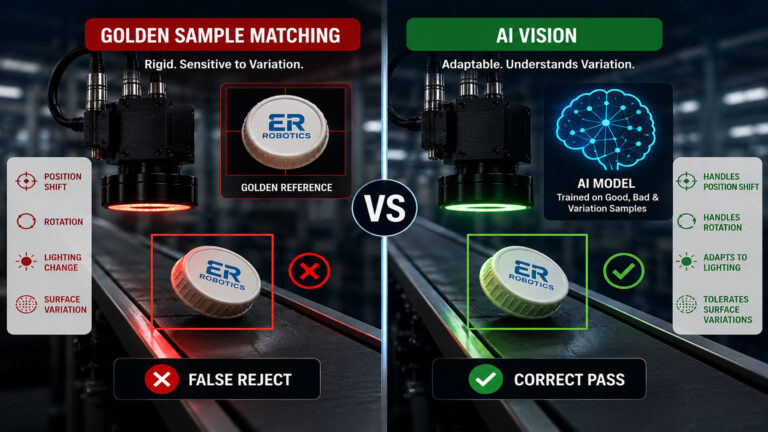
- Inspection Agents: Support automated quality inspection through defect detection, dimensional checks, object counting, colour inspection, and OCR.
These capabilities address different aspects of industrial operations and can help organizations improve visibility into quality, safety, and productivity.
Hypervise supports industrial camera environments and flexible deployment architectures, including edge, on-premise, cloud, and hybrid environments. Its integration capabilities allow visual intelligence to work alongside existing industrial systems.
Rather than treating quality inspection, workforce monitoring, and safety surveillance as completely separate activities, manufacturers can use these capabilities to develop a more connected understanding of their operations.
Making Lean Manufacturing More Measurable
Lean manufacturing has always focused on identifying inefficiencies and continuously improving processes. However, achieving these objectives across large manufacturing and warehouse environments requires reliable operational information.
Computer vision introduces an additional source of information by converting everyday visual activities into measurable data.
Manufacturers can use this information to understand material movement, monitor production activities, identify process deviations, and strengthen workplace safety.
The technology does not replace lean methodologies, operational expertise, or human decision-making. Instead, it provides additional visibility to help teams apply these principles more consistently.
As AI and industrial automation continue to evolve, visual intelligence will become an increasingly important part of connected manufacturing and supply chain operations.
The next step towards lean operations is not simply moving materials faster or automating more tasks. It is understanding how every activity contributes to the overall efficiency of the operation.